
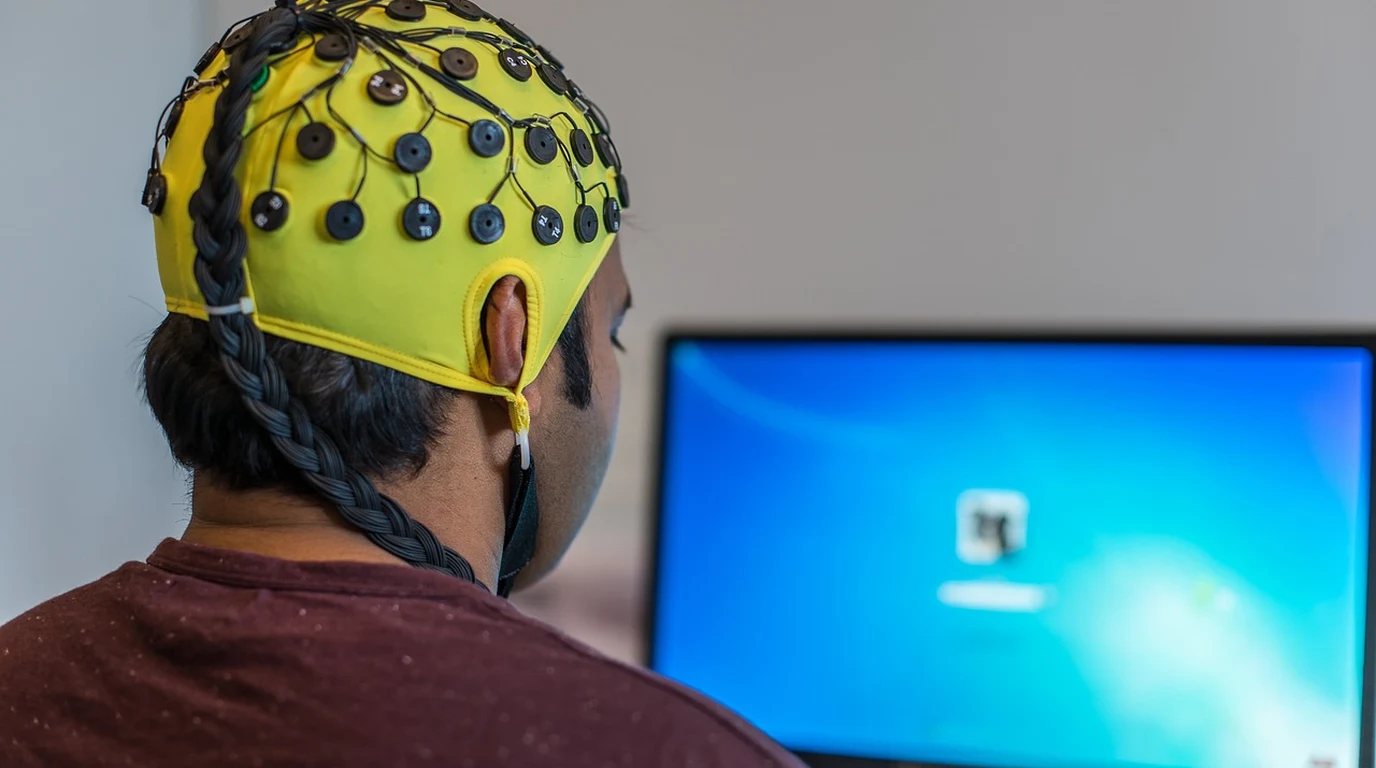
Over the past decade, non-invasive neuromodulation has transitioned from high-security military cognition laboratories and university neuroscience clinics into the consumer biohacking ecosystem. At the forefront of this cognitive enhancement revolution is transcranial Direct Current Stimulation (tDCS) and its alternating-current counterpart, tACS. Commercial hardware headsets—such as the Foc.us, NeuroMyst Pro, Halo Sport, and Fisher Wallace Stimulator—promise to accelerate neuroplastic motor learning, enhance sustained focus, elevate working memory, and alleviate mood dysregulation by delivering microcurrent electrical charges directly to the cerebral cortex. However, consumer forums are filled with reports of retinal phosphenes, skin electrode contact burns, and ineffective stimulation due to improper montage placement. Here is Marcus Vance’s forensic neuroengineering hardware breakdown of tDCS headsets: microamp current precision, anode-versus-cathode cortical excitability, electrode impedance chemistry, and safe montage protocols.
How Does tDCS Brain Stimulation Work and Is It Safe?
To grasp the biophysics of transcranial electrical stimulation, one must understand that tDCS does not directly force neurons to fire action potentials like electroconvulsive therapy (ECT) or high-field Transcranial Magnetic Stimulation (TMS). Instead, tDCS is a sub-threshold neuromodulatory intervention. When a tiny continuous microcurrent (1 to 2 mA) flows through the scalp, skull, and cerebrospinal fluid into the cerebral cortex, it alters the polarization state of pyramidal neuron dendrites.
Beneath the Anode (positive electrode), the inward-flowing electrical current causes sub-threshold resting membrane depolarization. This low-level depolarization shifts the neuronal threshold closer to activation, significantly increasing the probability that normal endogenous cognitive activity will trigger spike firing and subsequent long-term potentiation (LTP) via NMDA receptor upregulation. Conversely, beneath the Cathode (negative electrode), the outward-flowing current induces hyperpolarization, dampening spontaneous cortical firing and inducing long-term depression (LTD)—a mechanism highly beneficial for suppressing hyperactivity or downregulating chronic pain processing pathways.
Neurotechnology Hardware Architecture: Safety & Regulatory Matrix
Compare the electrical specifications and safety circuits across consumer and clinical neuromodulation hardware:
| Hardware Engineering Parameter | Cheap DIY / Unregulated Stimulator | Clinical-Grade Wearable (e.g., NeuroMyst / Neuroelectrics) |
|---|---|---|
| Current Delivery Topology | Simple resistor-limited voltage source | Closed-loop constant current linear regulator |
| Active Impedance Monitoring | None (Blind current injection) | Continuous real-time sampling (< 10 kΩ safety cutoff) |
| Voltage Compliance Ceiling | Uncapped (Can spike to 30V+ on dry hair) | Strict hardware compliance clamp (≤ 20V) |
| Ramp-Up / Ramp-Down Control | Instant toggle switch (Causes severe phosphenes) | 30-second automated soft linear ramp |
| Electrode Interface Media | Bare carbon rubber or adhesive gel | Medical-grade cellulose sponges in 0.9% NaCl saline |
Electrode Contact Impedance: The Physics of Skin Irritation
The single greatest hazard in transcranial electrical stimulation is Electrode Impedance Hotspots. Human skin possesses a relatively high electrical impedance (5,000 to 50,000 ohms), largely concentrated in the hydrophobic stratum corneum layer of dead keratinocytes. If an electrode pad is dry, improperly saturated, or makes contact with dense scalp hair, electrical current will concentrate into microscopic pinhole paths of lowest resistance.
Current concentrating through a tiny surface area dramatically spikes Current Density ($mA/cm^2$). Under high current density, local electrochemical reactions split water into hydronium and hydroxide ions, inducing rapid localized pH shifts that cause chemical acid/base skin burns. High-quality neurostimulation hardware continuously measures circuit contact resistance. If contact impedance exceeds 10 kilo-ohms, the device sounds an audio alarm and pauses stimulation until the user re-saturates the sponge electrodes with medical-grade 0.9% isotonic saline solution.
Clinical Montages: F3-FP2 Focus vs Motor Cortex Learning
In transcranial neuromodulation, electrode placement—known as a Montage—is mapped according to the standardized International 10-20 EEG placement system. Placement determines exactly which cerebral networks are up-regulated or down-regulated:
- The Focus / Executive Montage (F3 Anode / FP2 Cathode): The anode is placed over the Left Dorsolateral Prefrontal Cortex (DLPFC – F3), and the cathode is positioned over the contralateral right supraorbital ridge (FP2). This montage is clinically documented to enhance sustained attention, working memory updating, and executive task-switching efficiency.
- The Accelerated Motor Learning Montage (C3 Anode / Contralateral Shoulder): The anode is centered over the primary motor cortex (M1 – C3), with the reference cathode placed extracephalically on the contralateral deltoid. Popularized by athletic training protocols, this montage accelerates muscle memory consolidation and skill acquisition during complex physical drills.
- The Depression / Mood Protocol (F3 Anode / F4 Cathode): Bilateral DLPFC stimulation designed to rebalance frontal alpha asymmetry. Anodal activation of the left DLPFC coupled with cathodal dampening of the hyperactive right DLPFC has received CE medical approval in Europe for alleviating major depressive episodes.
Marcus Vance’s Step-by-Step tDCS Execution Protocol
To safely unlock the cognitive and neuroplastic benefits of non-invasive brain stimulation, strictly adhere to these neuroengineering guidelines:
- Use 0.9% Normal Saline Solution: Never wet sponge electrodes with tap water or pure distilled water. Distilled water is a non-conductive insulator that spikes impedance, while tap water contains unpredictable mineral concentrations. Use pharmaceutical 0.9% sodium chloride saline to ensure uniform, low-impedance current distribution.
- Limit Current to 2.0 Milliamperes: Never exceed 2.0 mA. The vast majority of clinical benefits occur between 1.0 mA and 1.75 mA. Delivering 3.0+ mA does not increase focus; it triggers ocular phosphene flashes, dizziness, and headache.
- Cap Sessions at 20 Minutes: Maximum neuroplastic plasticity is achieved within a 15 to 20-minute window. Running tDCS for 40+ continuous minutes triggers homeostatic counter-regulatory mechanisms that reverse the desired excitation, dampening cortical firing instead of boosting it.
- Pair Stimulation with Active Learning: tDCS is not a passive pill. It primes neural pathways for neuroplastic change. You must perform the targeted cognitive work—such as coding, language acquisition, or instrument practice—while the stimulation is actively running.
Transcranial neuromodulation primes synaptic pathways during the day, which are consolidated during uninterrupted deep slow-wave sleep. Review our lab findings on Mouth Taping for Sleep: Mandibular Devices & SpO2 Lab.