
You’ve probably spent the last three nights scrolling through forums, trying to figure out if the extra hundred dollars for a Muse S is actually buying you better brain data, or if you’re just paying a premium for a “sleep hoodie” for your forehead. I get it. When I first started digging into consumer-grade EEG, I was obsessed with the same question: does the math change when the hardware gets soft? You’re looking for a tool that can actually validate your meditation practice or map your sleep cycles, not a glorified plastic headband that loses its mind every time you take a deep breath. The frustration of “signal dropped” notifications in the middle of a flow state is real, and the stakes are high—your time, your cognitive performance, and your hard-earned cash are all on the line.
The Muse 2 and Muse S share identical 256Hz EEG internals and 4-channel sensors (AF7, AF8, TP9, TP10). The “math” is identical, but the Muse S provides significantly higher data integrity for sleep and movement due to its fabric-tensioned electrode stability, whereas the Muse 2 is strictly for stationary, upright sessions.
Why Does My Muse 2 Signal Drop During Deep Breathing?
If you’ve used the Muse 2, you know the “bird chirping” stops the moment you shift your jaw or take a particularly diaphragmatic breath. This isn’t a failure of the digital signal processing (DSP); it’s a mechanical failure of the rigid chassis. The Muse 2 uses a polycarbonate “wishbone” design. While it’s sleek, it relies on the tension of the plastic to press the silver/silicone electrodes against your skin.
The “Costly Trap” most biohackers fall into is assuming that a “bad signal” means the device is broken. In reality, the Muse 2 is hyper-sensitive to electrode lift-off. When you breathe deeply, your temporalis muscles (near your ears) shift slightly. Because the Muse 2 is rigid, a movement at the ear (TP9/TP10) can lever the frontal sensors (AF7/AF8) right off your forehead. This creates a massive spike in impedance, which the Muse processor interprets as noise, effectively “blinding” the Fast Fourier Transform (FFT) math that calculates your calm.
The Muse S solves this not with better sensors, but with better physics. By using a plush, breathable fabric strap, the electrodes are held in place by circumferential tension. This means the sensors move with your skin, not against it. If you’re planning on doing anything other than sitting perfectly still in a Zen-style posture, the rigid-body trap of the Muse 2 will eventually drive you crazy.
Is the Muse S Really Better for Sleep Staging Math?
When we talk about sleep staging, we’re looking for specific signatures: Delta waves (1–4 Hz) for deep sleep and the absence of Alpha (8–13 Hz) to signify the onset of unconsciousness. The Muse S Gen 2 was specifically engineered for this “all-night” math.
The hardware utilizes four active EEG channels. The frontal channels (AF7 and AF8) are your primary windows into the prefrontal cortex, while the temporoparietal channels (TP9 and TP10) sit behind the ears. In a sleep context, the Muse S must maintain contact for 6 to 8 hours. The silver/silicone sensors in the Muse S are embedded into the fabric, allowing for a much lower profile than the Muse 2. This is crucial because if you are a side-sleeper, the Muse 2’s rigid ear-pods will not only be painful, but they will also create “pressure artifacts”—false signals generated by the physical squishing of the sensor against the skull.
The Muse S “Digital Sleeping Pill” feature relies on this consistent contact to adjust its auditory feedback in real-time. If the math detects a rise in Beta (13–30 Hz) or Gamma (30–50 Hz) power—indicating you’re waking up or ruminating—it fades the audio back in. You simply cannot do this reliably with the Muse 2; it wasn’t built for the pillow.
| Feature / Spec | Muse 2 (Rigid) | Muse S Gen 2 (Fabric) | Biohacker Impact |
|---|---|---|---|
| EEG Channels | 4 (AF7, AF8, TP9, TP10) | 4 (AF7, AF8, TP9, TP10) | Identical raw data potential. |
| Sampling Rate | 256 Hz | 256 Hz | Standard for consumer EEG. |
| Ergonomics | Rigid Polycarbonate | Soft Microfiber Strap | Muse S wins for comfort/sleep. |
| Signal Stability | Moderate (Static only) | High (Sleep/Movement) | Muse S has fewer artifacts. |
| Battery Life | ~5 Hours | ~10 Hours | Muse S required for full sleep. |
Demystifying the FFT: How Muse Calculates Your Brainwaves
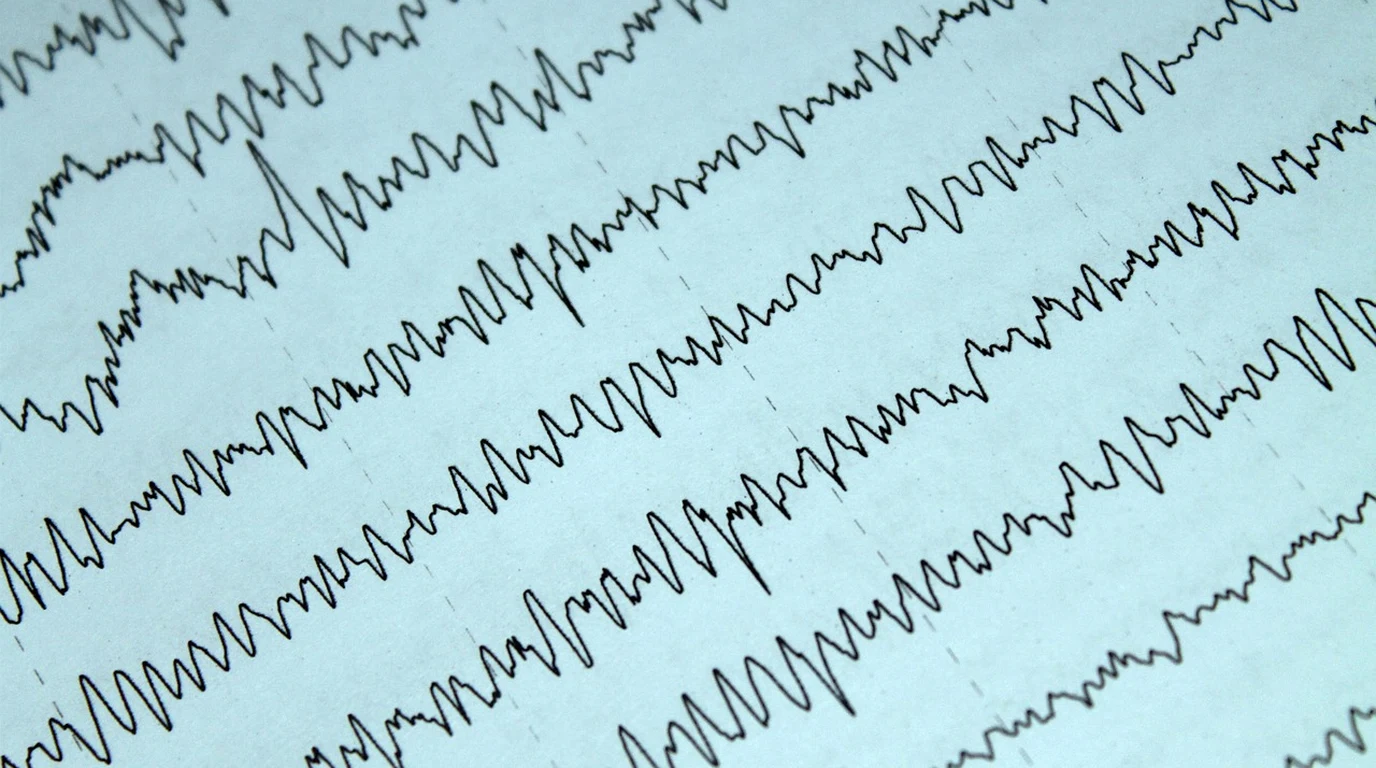
Whether you choose the 2 or the S, the math happening under the hood is a process called the Fast Fourier Transform (FFT). Think of your brain’s electrical output like a symphony playing all at once. You can’t easily hear the individual instruments (frequencies) just by looking at the raw microvolt wave. The FFT is the mathematical “prism” that separates that white light into a rainbow of specific bands.
1. Delta (1–4 Hz): The heavy bass. Dominant during deep, restorative sleep. If your Muse S shows high Delta while you’re awake, you’re likely seeing “eye blink artifacts” (which the math often confuses for Delta).
2. Theta (4–8 Hz): The “flow state” or “twilight” frequency. This is where the Muse math looks for meditation success. High Theta relative to Alpha often indicates a deep, hypnagogic state.
3. Alpha (8–13 Hz): The “bridge.” When you close your eyes, your Alpha power should spike. This is the “Posterior Alpha Rhythm.” If you don’t see this spike in your raw data, your sensors aren’t seated correctly.
4. Beta (13–30 Hz): Active thinking, focus, and anxiety. High Beta is the “noise” the Muse app tries to help you quiet.
5. Gamma (30–50 Hz): High-level information processing. While Muse tracks this, consumer-grade hardware often struggles to distinguish Gamma from muscle tension (EMG) in the forehead.
The Muse processor calculates “Absolute Band Power” (the raw strength of the signal) and “Relative Band Power” (the percentage of the total signal that a specific band occupies). For biohacking, Relative Band Power is the gold standard because it accounts for individual differences in skull thickness and skin impedance.
How Do I Calculate Frontal Alpha Asymmetry (FAA) at Home?
If you want to move beyond the “calm birds” of the native app, you need to look at Frontal Alpha Asymmetry (FAA). This is a validated metric for mood and emotional regulation. The math is simple: you compare the Alpha power of the left frontal sensor (AF7) against the right frontal sensor (AF8).
Research generally suggests that higher Alpha power on the left side (relative to the right) is associated with “approach” behaviors and a more positive mood, while the inverse can be linked to withdrawal or anxiety. To do this, you cannot use the standard Muse app. You need a third-party toolchain like Mind Monitor.
Mind Monitor allows you to export the raw microvolt data or the pre-calculated band powers into a CSV. From there, you apply the formula: `ln(Right Alpha) – ln(Left Alpha)`. If the result is positive, you’re trending toward a more resilient emotional state. This is the “pro-level” math that makes the Muse hardware a legitimate clinical tool in a biohacker’s pocket.
Which Third-Party Tools Actually Export Raw EEG Data?
Don’t get trapped in the “walled garden” of the Muse subscription. If you want to own your data, you need to know the toolchain.
* Mind Monitor: The absolute gold standard for Muse users. It gives you real-time graphs of all five bands, discrete channel tracking, and the ability to stream data via OSC (Open Sound Control) to your computer.
* LSL (Lab Streaming Layer): If you are a developer or researcher, you can use the `musedirect` or `petl` libraries to stream Muse data into Python or MATLAB. This allows for real-time artifact removal and custom neurofeedback loops.
* BrainBay: An open-source biofeedback application that can ingest Muse data for complex visualisations and custom “rewards” (e.g., playing a video only when your Theta/Beta ratio hits a certain threshold).
The Actionable Playbook: Your 3-Step Neurofeedback Protocol
If you want to stop playing with your Muse and start training with it, follow this protocol. It works for both Muse 2 and Muse S, but remember: if you’re using the Muse 2, do not move a muscle.
Step 1: The Impedance & Environment Check
Before you start a session, check your “sensor circle” in the app. But don’t just wait for it to turn solid. Use a damp cloth (or a tiny drop of saline solution) on the sensors. This lowers the skin-to-sensor impedance.
* The Pro Tip: Ensure you are at least 3 feet away from any high-voltage electronics or charging cables. 60Hz “mains hum” is the enemy of clean EEG math and can create massive artificial peaks in your Beta band.
Step 2: Establish a 2-Minute Baseline
Your brain is different every day. Before you try to “meditate,” record 2 minutes of raw data using Mind Monitor while sitting quietly with your eyes open, then 2 minutes with eyes closed.
* The Math: Look for the “Alpha Peak.” When your eyes close, you should see a clear surge in the 8–13 Hz range on the TP9/TP10 channels. If you don’t see this, your headband is too high or too low. Adjust until that Alpha spike is visible. This is your “System Ready” signal.
Step 3: The Focus-to-Flow Training
Set a timer for 20 minutes.
1. Minutes 0–5: Focus on “Active Beta Reduction.” Use the Muse app’s “Rain” soundscape. Your goal is to keep the rain as quiet as possible. This trains your ability to inhibit “top-down” ruminative thought.
2. Minutes 5–15: Switch to “Theta Promotion.” This is harder. You want to feel “heavy” and “spacious.” In Mind Monitor, you are looking for the Theta line to cross above the Alpha line. This is the “crossover” point of deep meditation.
3. Minutes 15–20: Integration. Open your eyes but try to maintain the internal “quiet” you just built. Watch how the math reacts to the visual input.
Frequently Asked Questions
Q: Can I use the Muse 2 for sleep tracking if I wear a headband over it?
A: You can try, but the rigid pods will likely cause skin irritation or “pressure sores” over an 8-hour period. Additionally, the Muse 2 battery is only rated for about 5 hours, meaning you’ll miss the most important REM cycles in the early morning.
Q: Does the Muse S Gen 2 have better sensors than the original Muse S?
A: The EEG sensors are the same, but the Gen 2 features an improved “Digital Sleeping Pill” algorithm and a more durable charging port. The core “math” of the brainwave detection remains identical.
Q: Is the raw data from Muse medical grade?
A: It is “research-grade” for band power analysis, but it is not a diagnostic tool. While the 256Hz sampling rate is excellent, the lack of a “ground” electrode on the earlobe (it uses a reference on the forehead) means it is more susceptible to noise than a $20,000 clinical system.