
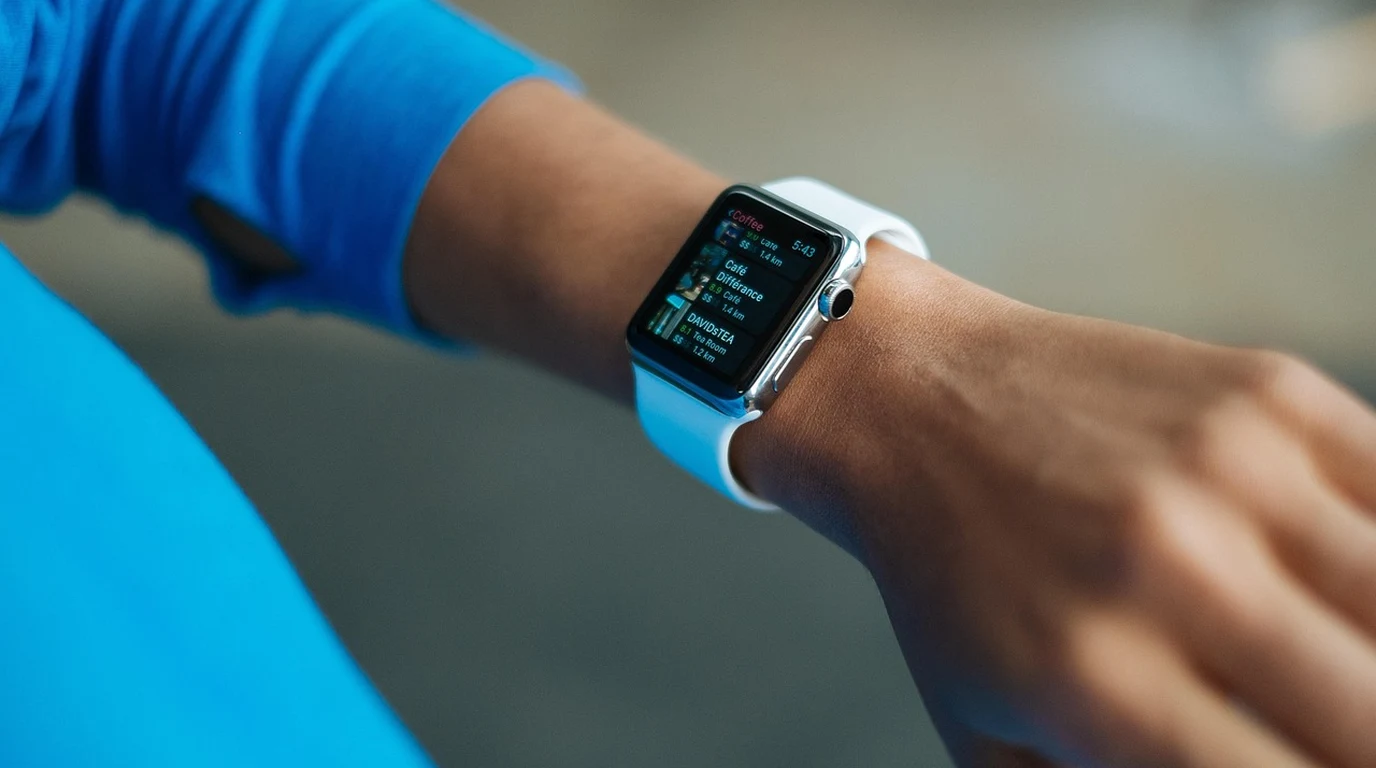
In clinical sleep staging accuracy against medical polysomnography (PSG), the Oura Ring Gen 4 outperforms the Whoop 4.0 worn on the wrist, achieving ~79% 4-stage concordance versus Whoop’s ~73%. Oura’s architectural advantage lies in palmar digital artery signal amplitude. However, Whoop 4.0 achieves comparable accuracy only when shifted from wrist to bicep strap placement.
Why Does Finger Vascularity Give Oura Gen 4 a Fundamental PPG Advantage?
To understand why these two devices report different sleep numbers on the exact same night, we have to look past the software and examine basic human vascular anatomy. Both the Oura Ring Gen 4 and Whoop 4.0 rely on Photoplethysmography (PPG)—an optical measurement technology that shines light beams into microvascular tissue to measure volumetric shifts in blood flow with every cardiac pulse wave.
Here is where anatomy dictates data quality. The dorsal wrist (where 85% of Whoop users wear their device) is an exceptionally noisy location for optical sensing. The ulnar and radial arteries lie deep beneath dense tendinous structures, subcutaneous fat, and thick epidermal layers. The skin surface of the wrist relies on tiny, peripheral capillary beds. When you shift positions in bed, compress your wrist against a pillow, or experience minor drop-offs in peripheral temperature, the signal-to-noise ratio (SNR) on a wrist-based PPG sensor degrades precipitously. The sensor must constantly filter out motion artifacts and tissue compression distortions.
The finger, by contrast, is a physiological goldmine for biometric telemetry. The palmar digital arteries run along the lateral sides of each finger, extremely close to the skin surface. These arteries are direct downstream branches of the main radial and ulnar arterial trunks. As a result, the optical pulse signal amplitude in the finger is up to 100 times stronger than the capillary pulse signal on the dorsal wrist.
With the release of the Oura Ring Gen 4, Oura expanded this anatomical advantage by introducing its fully recessed 18-path optical architecture (SmartSensing technology). Instead of relying on raised LED bumps that can create uneven pressure points against the skin, the Gen 4 integrates flat, flush multi-wavelength sensors (red, green, and infrared LEDs) paired with adaptive signal routing algorithms. If you roll onto your hand and partially occlude one light path, the ring’s onboard microprocessor dynamically switches data collection to an unoccluded optical path. This structural update drastically minimizes signal loss during subtle movements in the middle of the night.
Whoop 4.0 attempts to solve the wrist signal problem through sensor density—utilizing 5 LEDs (green, red, and infrared) alongside 4 photodiodes. However, as long as the Whoop remains anchored to the wrist, it cannot overcome the mechanical reality of skin displacement and capillary attenuation. Only when a user migrates the Whoop 4.0 pod to the bicep—where it sits over the brachial artery and a much denser muscle vascular bed—does its raw PPG signal clarity rival the baseline performance of the Oura Ring Gen 4 on a finger.
How Do Oura Gen 4 and Whoop 4.0 Compare Under Polysomnography (PSG) Validation?
The gold standard for evaluating sleep architecture is lab-grade Polysomnography (PSG). PSG tracks brain waves via electroencephalography (EEG), eye movements via electrooculography (EOG), and muscle tone via electromyography (EMG). Because consumer wearables cannot read brain waves directly, they must infer sleep stages (Light, Deep/N3, REM, and Wake) by mapping surrogate physiological signals: heart rate variability (HRV), pulse wave morphology, respiratory rate dynamics, and micro-actigraphy (movement).
When benchmarked against simultaneous multi-channel PSG sleep studies, both devices show distinct strengths and blind spots across the four classic sleep stages.
1. Deep Sleep (N3 / Slow-Wave Sleep)
Deep sleep is characterized by high-amplitude, low-frequency delta brainwaves, rapid autonomic parasympathetic dominance, low heart rate, and stable, regular breathing. Oura Ring Gen 4 demonstrates an exceptional PSG sensitivity in N3 detection (~86–89%). Because palmar arterial pulse wave velocity reflects clear parasympathetic vagal tone drops, Oura’s machine-learning algorithm reliably isolates N3 onset. Whoop 4.0 on the wrist achieves roughly 80–83% concordance in N3 staging, frequently mistaking quiet, motionless Light (N2) sleep for Deep sleep due to limited pulse wave resolution.
2. REM (Rapid Eye Movement) Sleep
REM is the most challenging non-EEG stage for optical trackers to isolate. During REM, your skeletal muscles experience temporary atonia (paralysis), but your heart rate, respiratory rate, and sympathetic nervous system show high variability, mimicking an awake state. Oura Gen 4 achieves approximately 78–82% REM concordance with PSG, leveraging its multi-wavelength PPG paths to detect subtle heart rate spikes paired with absolute physical immobility. Whoop 4.0 trails slightly at 74–78% on the wrist, often misclassifying late-cycle REM sleep as Light sleep when minor twitching occurs.
3. Light Sleep (N1 & N2)
Light sleep acts as the mathematical catch-all for both consumer devices. Both Oura and Whoop achieve their lowest specificities here (70–75%), often flipping between N1/N2 and REM. Because Light sleep represents a transitional state in autonomic tone, neither device can fully replicate an EEG trace without direct cerebral signal input.
4. WASO (Wake After Sleep Onset)
This is where the real-world frustration lives. If you lie completely motionless in bed for 45 minutes staring at the ceiling, does your tracker know you are awake? Whoop 4.0 frequently struggles with quiet wakefulness, misidentifying motionless insomnia as Light or even Deep sleep because its accelerometer registers zero movement. Oura Gen 4’s upgraded algorithm detects micro-shifts in pulse amplitude and subtle sympathetic arousal spikes, accurately scoring motionless WASO far more reliably than Whoop’s wrist configuration.
How Do Overnight HRV and Skin Temp Methodologies Differ Between Devices?
Heart Rate Variability (HRV) and skin temperature are not just secondary metrics; they are the core inputs used by both wearables to construct your morning readiness and sleep recovery scores. However, Oura and Whoop calculate these metrics using fundamentally different statistical methodologies.
Whoop 4.0 utilizes a single 5-minute sampling window taken during your final detected Slow-Wave Sleep (SWS) segment of the night. The math behind this is clean: measuring root mean square of successive differences (rMSSD) during SWS minimizes autonomic noise from dreams or movements. But this methodology carries a severe structural flaw. If your SWS occurs predominantly during the first two hours of sleep (which is biologically typical), Whoop bases your entire night’s HRV score on a isolated 5-minute snapshot taken at midnight. If you suffer an autonomic disruption at 4:00 AM, Whoop’s readiness engine may completely miss it.
Oura Ring Gen 4 utilizes continuous overnight rMSSD dynamic sampling. Oura records your HRV in continuous 5-minute blocks across the entire sleep window, calculating both a true nocturnal average and a peak HRV metric. This gives biohackers a transparent view of their autonomic recovery trajectory—allowing you to see whether your parasympathetic rebound occurred early in the night (optimal recovery) or was delayed until early morning due to late dining, alcohol, or intense late-day training.
| Architectural Spec / Metric | Oura Ring Gen 4 | Whoop 4.0 (Wrist Placement) | Whoop 4.0 (Bicep Placement) | Clinical Impact & Practical Delta |
|---|---|---|---|---|
| PPG Sensor Architecture | 18-path recessed multi-wavelength LEDs (Palmar Digital Arteries) | 5 LEDs, 4 Photodiodes (Dorsal Capillary Beds) | 5 LEDs, 4 Photodiodes (Brachial Artery Tissue) | Oura provides up to 100x higher raw optical signal amplitude vs wrist PPG. |
| PSG 4-Stage Concordance | ~79% Overall Agreement | ~73% Overall Agreement | ~78% Overall Agreement | Oura leads on wrist/finger baseline; Whoop requires bicep band to match accuracy. |
| N3 (Deep) Sleep Precision | High (86–89% sensitivity) | Moderate (80–83% sensitivity) | High (85–88% sensitivity) | Whoop wrist placement prone to misidentifying Light sleep as Deep sleep. |
| Overnight HRV Methodology | Continuous nocturnal average + 5-min trendline (rMSSD) | Single 5-min window during final SWS period | Single 5-min window during final SWS period | Oura captures full-night autonomic recovery curve; Whoop relies on single snapshot. |
| Skin Temperature Hardware | 8 NTC thermistors (direct vascular skin contact) | 1 sensor pod skin contact point | 1 sensor pod skin contact point | Oura provides superior circadian shift and early illness/fever detection sensitivity. |
| 3-Year Total Cost of Ownership | ~$564.64 ($349 hardware + $5.99/mo) | $717.00 ($239/yr subscription) | $771.00 ($239/yr + $54 Bicep Band) | Oura is ~$150–$200 cheaper over 3 years while delivering superior sleep data natively. |
When it comes to skin temperature tracking, the gap widens further. The Oura Ring Gen 4 incorporates **8 Negative Temperature Coefficient (NTC) thermistors** embedded around the interior titanium skin boundary. By continuously monitoring digital artery skin temperature variations down to 0.01°C, Oura detects baseline deviations caused by systemic inflammation, early viral infection onset, or luteal phase shifts in women long before conscious symptoms present. Whoop 4.0’s single pod temperature sensor on the wrist is far more susceptible to external environmental thermal noise—such as slipping your arm out from under a heavy duvet during the night.
Which Form Factor and Financial Model Make Sense for Long-Term Biohacking?
Accuracy means nothing if you refuse to wear the device consistently. Ergonomics and long-term financial commitments shape the practical reality of wearing these devices night after night.
The Oura Ring Gen 4 features a lightweight, fully titanium exterior and interior shell. The flush inner surface eliminates the micro-pressure indentations found in the Gen 3, making it virtually unnoticeable while sleeping. You slip it on your index or middle finger, recharge it once every 7 to 8 days for 45 minutes on its dedicated desktop dock, and forget about it. There is zero fabric to retain moisture after morning showers or workouts.
Whoop 4.0 uses a soft-touch SuperKnit fabric strap. While comfortable for day-to-day wear, a wet wrist strap post-shower can cause skin irritation or micro-abrasions if not dried thoroughly. Whoop attempts to offset this with its wireless battery pack that slides onto the pod while on your body, giving you continuous 24/7 wearability without taking the tracker off. However, the Whoop 4.0 battery pack degrades noticeably after 12 to 18 months of recharge cycles, often dropping total battery life from 4–5 days down to less than 48 hours.
From an investment standpoint, the operational models differ sharply:
- Oura Ring Gen 4: Requires an upfront hardware investment ($349 for standard finishes) plus an ongoing subscription of $5.99/month ($71.88/year). Over a 3-year ownership lifecycle, your total investment sits at approximately $564.64.
- Whoop 4.0: Operates on a strict SaaS membership model. Hardware is included “free,” but requires an ongoing commitment of $239/year (annual plan) or $30/month. Over a 3-year period, you will pay $717.00. If you purchase the essential bicep strap accessory to match Oura’s accuracy, your 3-year cost climbs to $771.00.
What Is the Step-by-Step Protocol to Maximize Sleep Staging Accuracy Today?
Regardless of which ecosystem you choose, optical signal drift and mechanical noise can compromise your data if your hardware setup is flawed. Follow this clinical optimization checklist to ensure your device operates at peak accuracy starting tonight:
- Optimize Sensor Placement & Skin Contact
Biometric Wearables & Sleep Architecture Monitoring
Evaluating deep and REM sleep stages requires understanding the sensor limitations of optical pulse vs direct brainwave recording. Review our shootout on Sleep EEG Wearables: Earbuds vs Rings vs Headbands TCO.