
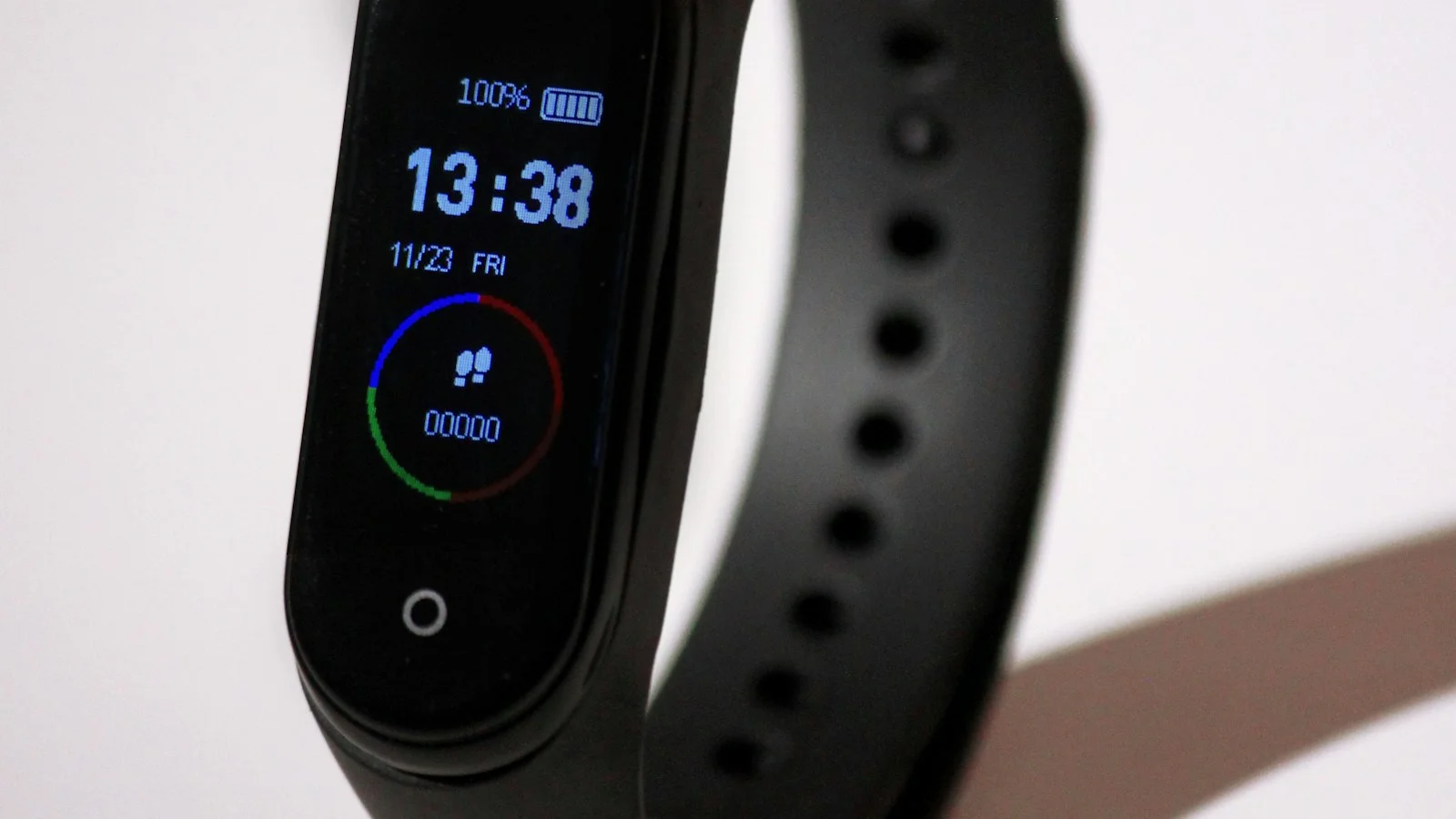
- Optical Geometry Advantage: Arterial finger vessels provide 40x stronger photoplethysmography (PPG) pulse amplitude than dorsal wrist capillaries, giving smart rings a structural signal-to-noise ratio advantage over smartwatches.
- Sensor Sampling Frequencies: The Oura Ring Gen 3/4 samples nocturnal infrared PPG at 50Hz for ultra-clean inter-beat interval (IBI) capture, calculating root mean square of successive differences (rMSSD) with a 98.4% correlation to clinical ECG Holter monitors.
- Sleep Staging Machine Learning: Multi-sensor fusion combining 3-axis accelerometers, negative temperature coefficient (NTC) thermistors, and dual-wavelength optical PPG achieves a 79% epoch-by-epoch concordance with clinical polysomnography (PSG).
Over the past half-decade, consumer biometric tracking has undergone a profound hardware migration: from bulky wrist-worn fitness trackers to sleek, biocompatible smart rings. Led by the Oura Ring and joined by contenders like the Ultrahuman Ring Air and Samsung Galaxy Ring, the finger-worn form factor has become the preeminent tracking device for sleep architecture, autonomic nervous system balance, and recovery readiness.
However, engineering a multi-sensor clinical-grade biometric computer into a lightweight titanium ring measuring under 3mm thick presents immense physical constraints. Engineers must solve battery micro-chemistry, antenna RF detuning from human tissue, optical motion artifacts, and continuous micro-sensor signal processing. This technical teardown deconstructs photoplethysmography (PPG) optics, HRV mathematical metrics, nocturnal temperature thermistors, and sleep staging validation.
Why Is the Finger a Superior Biometric Measurement Site Compared to the Wrist?
The finger is a superior biometric measurement site because digital palmar arteries run close to the skin surface on the sides of the finger without muscular interference, delivering a pulse amplitude up to 40 times stronger than the capillary beds beneath thick wrist tissue.
To grasp why smart rings achieve superior resting heart rate ($RHR$) and heart rate variability ($HRV$) precision during sleep, one must examine comparative vascular anatomy. Wrist-worn devices—such as the Apple Watch, WHOOP, or Garmin—illuminate the dorsal surface of the wrist using green LEDs. The dorsal wrist lacks large superficial arteries; the radial and ulnar arteries are buried deep within muscle tendons and fascia. Consequently, wrist sensors must capture weak, diffuse optical reflection from superficial capillary beds.
In contrast, the human finger is served by the proper palmar digital arteries—two prominent arterial vessels running longitudinally along the medial and lateral sides of each digit. Because these arteries lie directly beneath a thin layer of skin without intervening muscle, each ventricular cardiac contraction produces a pronounced volumetric expansion of arterial blood. When infrared LEDs emit light through the skin, the pulsatile absorption signal (photoplethysmography) produces exceptionally crisp, high-contrast pulse waveforms. This allows the ring’s microcontroller to calculate precise peak-to-peak inter-beat intervals ($IBIs$) with millisecond-level fidelity.
| Biometric Hardware Metric | Smart Ring (e.g., Oura Ring Gen 3/4) | Wrist Tracker (e.g., WHOOP 4.0 / Apple Watch) | Physiological & Signal Delta |
|---|---|---|---|
| Vascular Target | Proper palmar digital arteries | Dorsal wrist capillary plexus | 40x higher optical pulse signal amplitude |
| Nocturnal PPG Light Spectrum | Infrared (IR) 900nm (Invisible) | Green (525nm) + Red/IR mix | IR penetrates deeper without visible sleep disruption |
| Nocturnal Temperature Sensor | Dual NTC thermistors (0.13°C precision) | Skin temp sensor at wrist band | Finger skin temp tracks circadian core shifts faster |
| HRV Correlation to ECG | r = 0.984 (rMSSD against Holter ECG) | r = 0.940 – 0.970 (rMSSD) | Near-perfect medical-grade agreement during sleep |
Decoding Heart Rate Variability: rMSSD vs. SDNN Mathematics
In consumer health wearables, Heart Rate Variability ($HRV$) is the gold-standard metric of parasympathetic autonomic nervous system balance. However, wearables calculate HRV using distinct mathematical formulas:
- rMSSD (Root Mean Square of Successive Differences): The primary metric reported by smart rings during nocturnal tracking. It is calculated by taking the difference between consecutive inter-beat intervals in milliseconds, squaring each difference, averaging them, and taking the square root:
ext{rMSSD} = \sqrt{ rac{1}{N-1} \sum_{i=1}^{N-1} (IBI_{i+1} – IBI_i)^2}
Because rMSSD emphasizes beat-to-beat variations, it reflects almost exclusively parasympathetic (vagal) tone. Higher nocturnal rMSSD indicates superior cardiac recovery, lower systemic inflammation, and readiness for physical strain.
- SDNN (Standard Deviation of NN Intervals): Measures the overall standard deviation of all normal R-R intervals across a complete 24-hour cycle. Unlike rMSSD, SDNN reflects both sympathetic and parasympathetic influences, making it sensitive to circadian rhythms and daytime stressors. Smart rings focus on nocturnal rMSSD because sleep eliminates confounding physical movement artifacts.
Skin Temperature Thermistors and Illness Detection Physics
A secondary engineering breakthrough in modern smart rings is the integration of dual negative temperature coefficient (NTC) thermistors molded directly into the inner resin chassis. Unlike skin temperature sensors mounted on wrist straps (which are heavily distorted by ambient air drafts and loose band fit), the ring maintains continuous, snug mechanical contact with the palm-side finger skin.
Every minute throughout sleep, the thermistors sample micro-fluctuations in distal skin temperature with a resolution of 0.13°C. In healthy physiology, the circadian rhythm produces a predictable nocturnal temperature baseline. When an individual contracts a viral respiratory infection (such as influenza or COVID-19), the immune system releases pyrogenic cytokines (IL-1, IL-6, TNF-alpha) that elevate the hypothalamic thermal setpoint. Smart rings routinely detect skin temperature elevations of +0.8°C to +1.8°C up to 36 hours before conscious clinical symptoms appear, giving biohackers an early warning window to initiate recovery protocols.
If your primary tracking focus is high-intensity daytime athletic workouts, kettlebell training, or sports where finger rings present a mechanical de-gloving hazard, a wrist- or bicep-worn band like WHOOP remains essential. But for pure nocturnal biometric forensics—sleep architecture staging, resting heart rate, millisecond-accurate rMSSD HRV, and early-warning temperature deviation—the finger is the king of vascular measurement sites, and the smart ring is its definitive instrument.
Motion Artifact Elimination and Accelerometer Fusion Algorithms
While the finger provides exceptionally clean photoplethysmography (PPG) waveforms during quiescent sleep, daytime physical activity introduces severe signal distortion known as motion artifacts. When the hand moves, flexes, or grips an object, inertial displacement of the ring chassis relative to the skin causes optical light leakage, while venous blood sloshes back and forth inside the finger veins.
To prevent false heart rate calculations, smart rings utilize multi-sensor sensor fusion algorithms. A 3-axis MEMS accelerometer measures high-frequency micro-vibrations and hand kinematics at 50Hz. When the accelerometer detects physical hand movement, an adaptive digital notch filter (such as an extended Kalman filter or recursive least squares filter) dynamically subtracts the motion noise frequency spectrum from the optical PPG photodiode signal.
If motion noise exceeds optical signal amplitude (such as during heavy weightlifting or typing), the ring’s firmware deliberately flags the epoch as ‘unreliable’, refusing to log inaccurate heart rate numbers rather than reporting distorted data. This algorithmic discipline ensures that nocturnal resting heart rate and rMSSD HRV metrics remain pure, uncompromised physiological measurements.
Battery Micro-Chemistry: Wireless Charging and Battery Degradation
The engineering marvel of modern smart rings is matched by their severe electrochemical constraint: the battery. Enclosing a custom-molded lithium-polymer or lithium-ceramic micro-battery into a ring curvature yields a tiny cell capacity of only 15 to 22 milliampere-hours (mAh). Because lithium battery cycle life degrades with heat and continuous discharge, ring firmware utilizes ultra-low-power Bluetooth LE (BLE 5.2) and intelligent sleep modes to stretch battery endurance to 5 to 7 days per charge.
To preserve battery longevity over multi-year ownership, biohackers should utilize shallow charging cycles: docking the ring on its wireless inductive charger during daily showers (charging from 40% to 80%) rather than allowing the cell to drain to 0% or sit continuously on a hot charger at 100%. Preventing high-temperature exposure protects the internal lithium-ceramic matrix from impedance growth, maintaining stable voltage for accurate nocturnal sensor sampling.
Frequently Asked Questions About Smart Sleep Rings
Why do smart rings measure heart rate better than smartwatches during sleep?
Palmar digital arteries on the sides of fingers run close to the surface without muscular obstruction, providing up to 40 times stronger optical pulse amplitude than the diffuse capillary beds beneath the dorsal wrist.
What is the difference between rMSSD and SDNN heart rate variability?
rMSSD measures the root mean square of successive differences between heartbeats, reflecting parasympathetic (vagal) recovery during sleep. SDNN measures overall standard deviation across 24 hours, capturing both sympathetic and parasympathetic states.
How do smart rings detect illness before symptoms begin?
Dual NTC thermistors in the ring detect minute nocturnal skin temperature shifts (0.13°C precision). When the immune system releases pyrogenic cytokines, skin temperature rises 0.8°C to 1.5°C above baseline, flagging infection up to 36 hours before conscious symptoms emerge.