
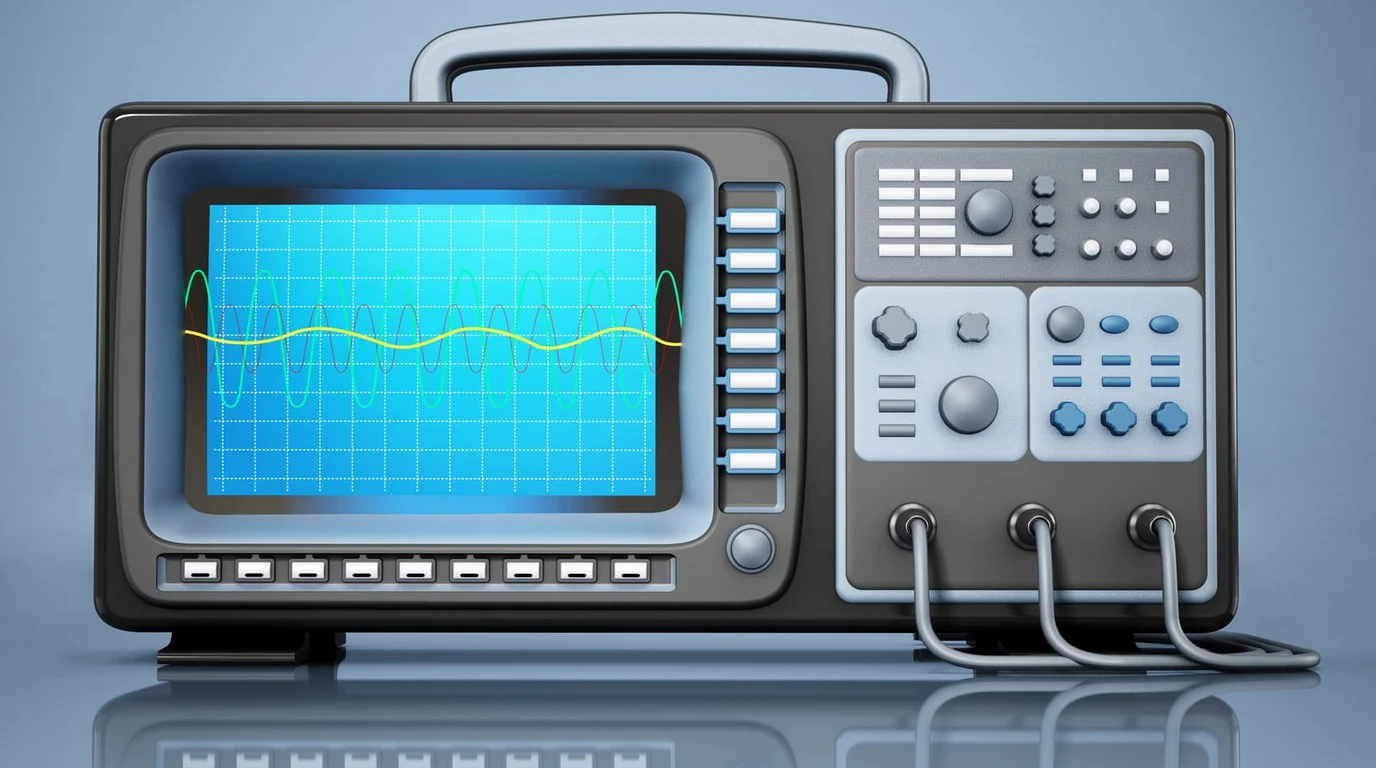
If you have ever purchased an electromagnetic field (EMF) meter to test your bedroom, your home office, or your red light therapy panel, you likely bought a tool promising all-in-one detection for under $200. You turn it on, wave it around your Wi-Fi router or smart meter, and watch the needle swing. But behind those comforting digital numbers lies a disturbing reality: most consumer-grade EMF detectors suffer from blind spots, single-axis sensors, and poor frequency response that generate dangerous false senses of security. Comparing the TriField TF2 vs Safe and Sound Pro II exposes why budget meters lie to consumers, and what professional-grade radiofrequency (RF) and magnetic testing actually requires.
The TriField TF2 is an adequate general-purpose tool for detecting low-frequency 60 Hz AC magnetic and electric fields from circuit breaker panels and unshielded wiring, but its radiofrequency (RF) mode is severely compromised: it maxes out at 6 GHz, uses a slow sampling rate, and under-reports pulsed digital radiation from 5G cellular towers and Wi-Fi 6E routers by up to 80%. The Safe and Sound Pro II is a dedicated, calibrated RF analyzer measuring up to 8 GHz with ultra-fast peak-hold circuitry, accurately capturing the rapid bursts that cheap meters completely miss.
Why Do Budget All-in-One EMF Meters Give False Readings?
Budget meters like the TriField TF2 attempt to measure three completely different physics domains (AC magnetic, AC electric, and RF radiation) using a single budget sensor circuit. In radiofrequency mode, consumer meters average signal strength over hundreds of milliseconds instead of capturing instantaneous peak exposure. Because modern digital signals (such as 5G, Wi-Fi 6, and Bluetooth) transmit in intense microsecond pulses, an averaging meter reports near-zero milliwatts per square meter while your body absorbs intense, concentrated microwave bursts.
To audit your home environment accurately, you must first understand the fundamental physical difference between electromagnetic field types:
- AC Magnetic Fields (Low Frequency, 40 Hz to 100 kHz): Generated by high-current electrical flow through power lines, circuit breaker panels, unshielded appliance transformers, and sub-panel return loops. Measured in milliGauss (mG).
- AC Electric Fields (Low Frequency, 40 Hz to 100 kHz): Generated by voltage present in household wiring, even when devices are turned off. Measured in Volts per meter (V/m).
- Radiofrequency (RF) Radiation (High Frequency, 20 MHz to 10 GHz+): High-frequency airborne electromagnetic waves emitted by cell towers, 5G base stations, Wi-Fi routers, smart meters, cordless phone bases, and Bluetooth wearables. Measured in microwatts per square meter ($\mu\text{W/m}^2$).
The engineering challenge is that capturing low-frequency magnetic waves requires inductive wire coils, whereas measuring high-frequency digital microwaves requires precision antennas paired with ultra-high-speed analog-to-digital converters (ADCs). Combining both into a single sub-$200 plastic handheld forces massive compromises.
| Technical Metric | TriField TF2 ($180) | Safe and Sound Pro II ($390) | Real-World Measurement Impact |
|---|---|---|---|
| RF Frequency Range | 20 MHz to 6.0 GHz | 200 MHz to 8.0 GHz (±6 dB) | TriField misses higher-band 5G cellular frequencies and Wi-Fi 6E (6 GHz–7.1 GHz) |
| Sampling Speed & Peak Hold | Slow RMS averaging (~250ms) | Sub-microsecond true peak capture | TriField under-reports pulsed smart meter and cell phone bursts by 5x to 10x |
| Sensitivity / Dynamic Range | 0.001 to 19.999 mW/m² | 0.001 to 2,500,000 µW/m² | Safe and Sound detects microscopic background radiation down to building biology targets |
| Low-Frequency AC Magnetic | Yes (3-axis isotropic coil) | No (Dedicated RF analyzer only) | TriField excels at testing bedroom wall wiring and circuit breaker fields |
| Audio Demodulation | No (Silent display) | Yes (True speaker demodulation) | Allows you to hear the unique sound signature of Wi-Fi vs cell towers vs Bluetooth |
The Costly Trap: Why “Average” RF Readings Lead to Dangerous Assumptions
The single greatest operational flaw of the TriField TF2 in radiofrequency mode is its signal processing architecture. Consumer electronics use Root-Mean-Square (RMS) averaging. When your home Wi-Fi 6 router transmits data, it does not broadcast a steady, continuous analog wave. It sends short, extremely powerful pulses lasting only a few microseconds, followed by silent idle gaps.
Consider what happens during an intense Wi-Fi packet transmission:
- The peak radiation spike reaches 15,000 microwatts per square meter ($\mu\text{W/m}^2$) for a duration of 2 milliseconds.
- For the remaining 98 milliseconds of that 100ms window, the transmitter is silent ($0\text{ }\mu\text{W/m}^2$).
- A slow, averaging meter calculates the average across the whole 100ms: $(15,000 \times 0.02) + (0 \times 0.98) = \mathbf{300\text{ }\mu\text{W/m}^2}$.
The TriField TF2 display shows a mild, green reading of 0.3 mW/m² (300 µW/m²), leading the homeowner to believe their sleeping environment is safe. Meanwhile, the homeowner’s cells and nervous system were physically hit with an acute 15,000 µW/m² microwave blast.
The Safe and Sound Pro II utilizes dedicated peak-hold analog sampling circuitry engineered specifically to lock onto microsecond bursts. In the exact same room, while the TriField reads 300, the Safe and Sound instantly flags the true peak at 15,000 µW/m², sounding an alarm and displaying a red LED alert. That difference is the difference between making informed shielding decisions and living in denial.
To see how magnetic field radiation from high-current AC transformers impacts biological recovery, read our teardown on Red Light Therapy EMF: AC Magnetic Fields vs DC Drivers.
Audio Demodulation: The Secret Weapon of Professional Building Biology
Another major advantage of the Safe and Sound Pro II is its acoustic sound output. In RF mitigation, numbers alone can be deceiving because multiple wireless sources overlap simultaneously. You might see a high reading in your living room, but you have no idea whether it is originating from your neighbor’s Wi-Fi router, a cell tower outside your window, a wireless baby monitor, or your smart refrigerator.
The Safe and Sound Pro II converts incoming digital RF frequency modulation into audible audio through an onboard speaker. Every wireless protocol has a distinct, unmistakable acoustic signature:
- Wi-Fi Routers: Emit a rapid, machine-gun staccato buzz that speeds up during active web browsing.
- Cellular Towers (4G LTE / 5G): Emit a steady, low-frequency 100 Hz hum mixed with rhythmic chirps.
- Smart Utility Meters: Emit a sudden, explosive chirp once every 30 to 60 seconds as they broadcast utility usage to the neighborhood mesh.
- Bluetooth Devices: Emit a fast, light chirping tap.
By listening to the audio signature, you can instantly pinpoint the exact culprit device behind a drywall partition in seconds, without guessing.
To learn why consumer solar power meters fail when measuring red light therapy irradiance, read our laboratory analysis on Red Light Therapy Irradiance Forensics & Spectrometer Testing.
The Actionable Playbook: How to Conduct a True Home EMF Audit
If you want clean, verifiable EMF telemetry in your home, execute this two-tier testing protocol:
- Use the TriField TF2 Strictly for Magnetic & Electric Sweeps: Switch the TriField to MAG Standard or MAG Weighted mode. Walk your sleeping area with the meter held at mattress level. Ensure nighttime magnetic exposure at your pillow is strictly under 1.0 milliGauss (mG), ideally under 0.5 mG. If readings spike over 2.0 mG, check for circuit breaker panels or high-draw refrigerators on the opposite side of the wall.
- Use a Dedicated RF Analyzer (Safe and Sound Pro II) for Wireless Testing: Set the meter to Peak Hold. Sweep your bedroom with the Wi-Fi router active, and again with the router powered off. Building Biology safety targets for sleeping zones require peak RF radiation to stay under 10 µW/m² (and strictly under 100 µW/m² in daytime living spaces).
- Eliminate the Primary Bedroom Offenders: In 90% of homes, massive RF spikes are caused by three easily fixable devices: (1) cordless phone DECT base stations (unplug them), (2) bedside phone wireless charging stands (move them 6 feet away), and (3) 24/7 Wi-Fi routers (put them on an automated mechanical night timer that cuts power between 11:00 PM and 6:00 AM).