
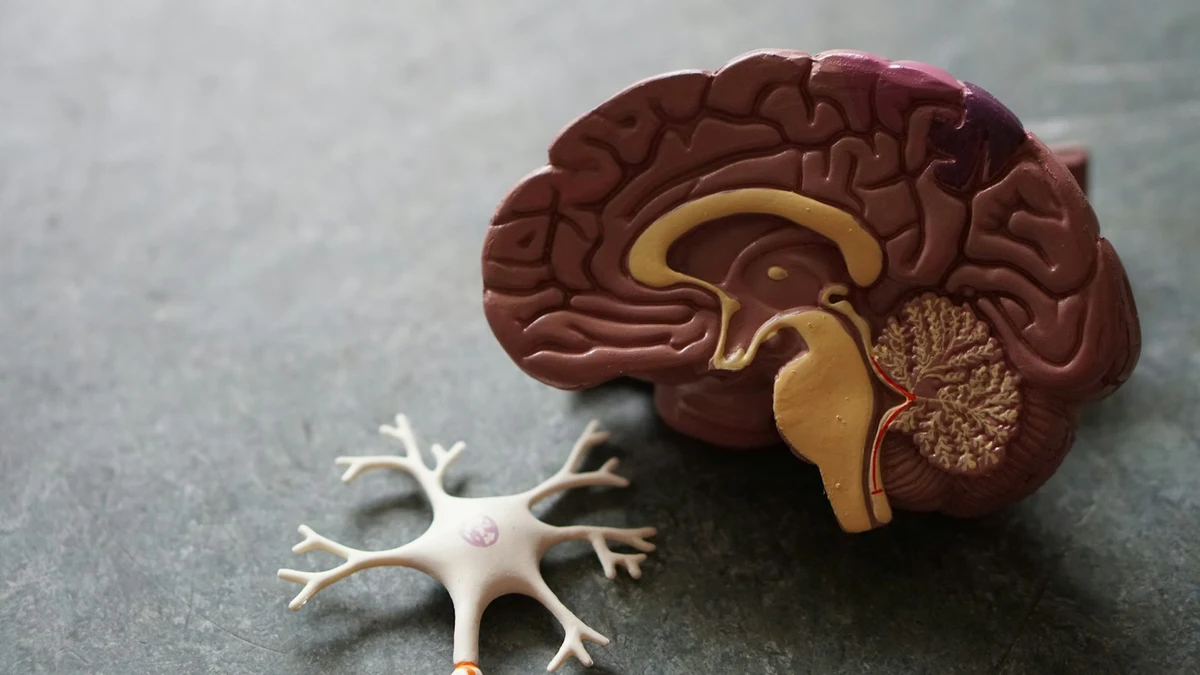
- Channel Topologies & Brain Coverage: Consumer EEG has bifurcated into focused meditation bands (Muse S with 4 frontal/temporal channels) and high-density brain-computer interfaces (Neurosity Crown with 8 motorized dry electrodes covering frontal, central, and parietal motor cortex lobes).
- Sampling Rates & Bandwidth Jitter: Raw electroencephalography requires a minimum of 256Hz sampling at 24-bit resolution to capture subtle high-gamma bursts (30Hz – 100Hz); Bluetooth Low Energy (BLE) packet loss remains the primary vector for temporal jitter in real-time neurofeedback training loops.
- Neurofeedback Training Protocols: Modern BCI software has transitioned from basic alpha-wave relaxation feedback to real-time closed-loop cognitive state tracking, integrating directly with Spotify, IDE code editors, and focus tools to dynamically mute notifications when user focus scores exceed 80%.
For decades, Quantitative Electroencephalography (qEEG) and neurofeedback were confined to specialized neurology clinics and clinical psychology offices. Patients were seated in shielded Faraday cages, fitted with tight neoprene caps, injected with messy conductive abrasive pastes, and tethered to massive multichannel amplifiers costing upwards of $30,000. While effective for diagnosing epilepsy and training ADHD executive function, the physical friction made daily self-directed neuro-optimization impossible.
In 2026, solid-state analog front-ends, active dry-contact micro-electrodes, and on-chip digital signal processors (DSPs) have democratized neuroscience into consumer-ready EEG Neurofeedback Headsets. Whether you are training your brain to enter effortless flow states, measuring meditation depth, or programming direct brain-computer interface (BCI) applications, consumer headsets now offer clinical-grade microvolt sensitivity. By comparing the three industry champions—the Muse S Gen 2, Neurosity Crown, and Emotiv Insight 2.0—engineers and biohackers can identify the ideal neuro-interface for their cognitive stack.
How Do Dry Consumer EEG Electrodes Compare to Clinical Wet Caps?
Dry consumer EEG electrodes eliminate conductive gels by using active silver/carbon polymers with ultra-high input impedance front-end amplifiers (10 to 100 Gigaohms). While clinical wet caps offer lower contact impedance (under 5 kΩ), modern active dry electrodes achieve comparable signal-to-noise ratios across standard alpha, beta, and theta bands within 30 seconds of donning.
The human brain generates minute electrical potentials ranging from 10 to 100 microvolts (μV) at the scalp surface. To detect these microscopic signals without abrasive conductive paste, modern headsets incorporate active electrode circuitry. An active electrode places a high-impedance operational amplifier (Op-Amp) directly on the back of the electrode pin, amplifying the signal immediately at the point of scalp contact before sending it across cables where electrical noise could interfere.
As documented in our testing of environmental EMF interference and shielding, consumer EEG headsets operate in unshielded home environments filled with 60Hz AC electrical grid hum and 2.4GHz/5GHz Wi-Fi radiation. Top-tier consumer headsets solve this using Common-Mode Rejection Ratio (CMRR) filtering exceeding 110dB, mathematically subtracting environmental noise while preserving authentic cortical rhythms.
| EEG BCI Headset | Channel Count & Placement | Electrode Technology | Sampling Rate & ADC Res | Primary Target Use Case | Software Ecosystem & API |
|---|---|---|---|---|---|
| Muse S Gen 2 | 4 Channels (AF7, AF8, TP9, TP10) | Flexible Conductive Fabric | 256 Hz / 14-Bit ADC | Meditation & Overnight Sleep Staging | Muse App + Mind Monitor / OSC |
| Neurosity Crown | 8 Channels (Frontal, Parietal, Occipital) | Custom Dry Polymer Comb Prongs | 256 Hz / 24-Bit ADC | High-Performance Flow & Developer BCI | Neurosity Cloud SDK (Node.js/Python) |
| Emotiv Insight 2.0 | 5 Channels (AF3, AF4, T7, T8, Pz) | Hydrophilic Semi-Dry Polymer | 128 Hz – 2048 Hz / 14-Bit | Academic Research & Mental Commands | EmotivPRO Suite (Subscription API) |
| Clinical 10-20 Wet Cap | 19 – 64 Full Scalp Channels | Ag/AgCl + Electrolyte Gel | 1000+ Hz / 24-Bit Studio ADC | Clinical Neurology & qEEG Mapping | EDF+ Format / Specialized Clinical Software |
Neurosity Crown: The Developer-First Flow State BCI Engine
The Neurosity Crown is engineered specifically for knowledge workers and software developers seeking sustained cognitive flow states. Packing eight high-performance dry comb sensors and a quad-core ARM processor on-board, the Crown runs localized neural networks to predict focus depth and trigger automated workspace productivity automations.
Unlike earlier EEG bands that were strictly designed as passive bluetooth streaming dongles, the Neurosity Crown operates as an autonomous edge compute node. Its onboard 1.8GHz processor executes proprietary machine learning models directly on the headset. It filters raw electroencephalography in real time, computing a continuous “Focus Score” (0% to 100%) and “Kinesis” mental intent vectors with sub-100ms latency.
In practice, software engineers use the Crown’s REST API and WebSocket streams to automate their physical and digital environments. When the Crown detects your focus score crossing 75%, it automatically toggles your Slack and email status to “Do Not Disturb,” shifts your smart lighting to focused 5000K daylight, and tunes your Spotify playlist to binaural soundscapes optimized for deep concentration. When attention wanes, the system alerts you to take a structured mental break. When paired with autonomic vagal regulation via transcutaneous vagus nerve stimulation hardware, biohackers achieve an impenetrable physiological fortress against cognitive distraction.
Muse S Gen 2: The Benchmark for Mindfulness and Sleep Tracking
The Muse S Gen 2 utilizes an ultra-soft fabric headband containing four conductive fabric sensors to deliver real-time auditory neurofeedback for meditation. Translating brainwaves into ambient weather sounds (calm weather for alpha states; stormy winds for active beta thoughts), it trains users to deliberately quiet mental chatter within minutes.
For individuals seeking stress mitigation, meditation mastery, and restorative sleep without technical developer configurations, the Muse S Gen 2 remains the consumer gold standard. Constructed from a breathable, machine-washable plush fabric band, the Muse S fits comfortably around the head without hard plastic pinch points, making it completely comfortable for side sleepers.
During meditation sessions, the Muse app provides real-time soundscapes: when your mind is calm and alpha waves dominate, you hear gentle breezes and chirping birds. When your mind wanders into anxious beta thoughts, the soundscape transforms into rumbling thunder. This real-time auditory biofeedback establishes a Pavlovian neural loop, teaching the user’s subconscious mind the exact interoceptive sensations required to dissolve stress.
If your goal is software-defined cognitive flow states, real-time focus automation, and deep developer BCI customization, the Neurosity Crown is without question the most advanced consumer neurotech hardware ever built. For individuals seeking mindful stress reduction, guided neurofeedback meditation, and comfortable overnight sleep stage tracking, the Muse S Gen 2 offers unmatched comfort, polished mobile software, and seamless daily consistency. The era of guessing your mental state is over—quantitative electroencephalography puts cognitive mastery under your direct control.